Trump's New Tariff Policy: Reshuffling Global Trade, Who Will Pay America's "Toll"?
Hot Topics
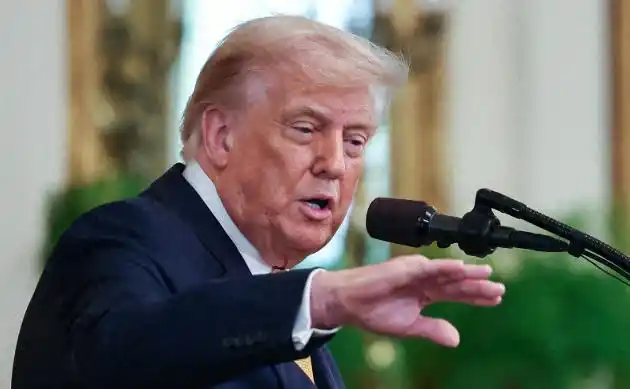
In August 2025, the White House officially launched a new round of "reciprocal tariffs." Executive orders signed by Trump took effect, imposing tariffs ranging from 10% to a maximum of 41% on goods from multiple countries. Some products that evaded inspections were even subject to a punitive 40% tariff. Trade policy shifted from "negotiation" to "punishment," with the United States once again turning tariffs into a devastating weapon on the economic battlefield.
At the same time, some sensitive industries, such as semiconductors and pharmaceuticals, were even singled out for a sharp rise, with tariff rates predicted to soar to 100% or even 250%. The Trump administration's logic was clear: "If you want to earn money from the United States, pay the toll first; if you want to avoid it, move your factories to the United States."
No major global economy was spared, from Canada, the European Union, Japan, Brazil, India, and Switzerland...all engaged in negotiations, concessions, or confrontation. Under Trump's bulldozer-like policies, the global supply chain is being forced to reshuffle.
Viewpoint Interpretation
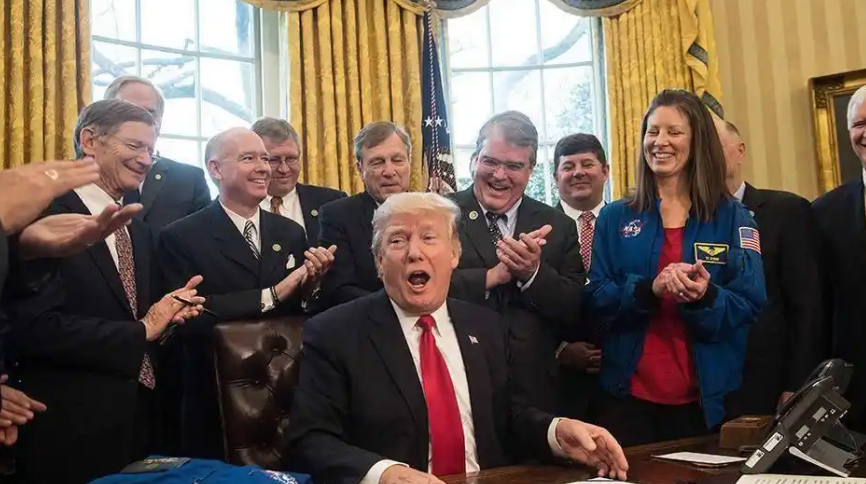
1. Tariffs are not just an economic tool; they are also a "nuclear weapon" in Trump's political rhetoric.
On the surface, these are tariffs, but in reality, they represent Trump's consistent "transactional politics": reducing international negotiations to a matter of profit, trading short-term gains for long-term leverage.
And "reciprocal" tariffs aren't essentially about fairness, but rather Trump's definition of "America First"—if you tax me, I'll double back.
This isn't the first time the United States has acted this way, but the scope and intensity of this move are truly unprecedented. They maintain technical ambiguity in negotiations with China; they increase tariffs on India under the pretext of "buying Russian oil"; and they impose a blanket 15% tariff on allies like the EU, Japan, and South Korea. While their attempts to win over the US are like boiling a frog in warm water, their "punitive tariffs" on major trading nations are like a hammer hitting them squarely on the head.
This tactic is indeed effective in the short term. Apple has invested $100 billion, and Japan and South Korea have pledged trillions of dollars in investments. Whether this will boost US GDP is unclear, but Trump's approval rating likely will.
2. The Global Tariff Map is Being Redrawn: Who Wins and Who Gets Lost?
-
Biggest Winner: Trump and US Manufacturing Regardless of the progress of the negotiations, Trump has already reaped a wave of political dividends and corporate promises. His precise targeting of sectors like semiconductors and pharmaceuticals, with their long supply chains and strong substitution potential, has effectively grasped the weakest points of his opponents.
-
Most Anxious: Switzerland, Japan, and Brazil Switzerland was directly slapped with a 39% tariff, the highest in Europe, while Japan was forced to open up quotas for agricultural products and automobiles, drawing criticism domestically for "selling out sovereignty." Brazil was even worse off. Originally expected to be 10%, it was slashed to 50% after additional clauses were added. Even coffee is subject to high tariffs, a truly unjust outcome.
-
Countries Relieving Temporarily: Mexico and Indonesia Mexico's tariffs were postponed for 90 days, while Indonesia successfully negotiated its tariff rate from 32% to 15% by purchasing US energy and Boeing aircraft. However, the price paid was a huge order. Whether this "purchased" reprieve was truly worthwhile remains to be seen in subsequent negotiations.
-
Political Victims: Canada and India Trump blamed Canada for "poor drug trafficking" and imposed a 35% tariff on it. India, labeled "disobedient" for "buying Russian oil," was repeatedly slapped with further tariffs. This is a classic example of political scheming at the expense of economics.
3. This Is Not a "Trade War," But a "Supply Chain War"
The real danger lies not in the tariffs themselves, but in the US's strategic intention to use them to adjust the supply chain.
Apple's reshoring, investment from Japan and South Korea, EU natural gas purchases, and even Japan's opening of rice and auto quotas are essentially "forced binding" to the US market.
Who can withstand this? Only countries with sufficient scale and leverage. Small and medium-sized countries with no technological alternatives and a deep reliance on the US market are destined to be sacrificed.
The future of international trade will no longer be a simple "you sell, I buy" model, but rather a feudal landlord model where "you must first invest in my market and pay me protection fees before we can discuss cooperation."
End
Trump's combination of measures not only redefined the rules of trade negotiations but also signaled the end of the golden age of globalization.
Where globalization used to be efficiency-oriented, the current trade system is evolving towards a dual polarization of "security and control." The US, under the guise of "fair trade," is actually engaging in "economic colonization."
We are in an era where we are forced to re-select our positions and adjust our export strategies—not just for businesses, but also for national strategies. Want to continue doing business? First, ask yourself whether the US is willing to let you into its "walled garden."